Do private jets fly in bad weather?
By Jake Lombardi. Published .
The short answer
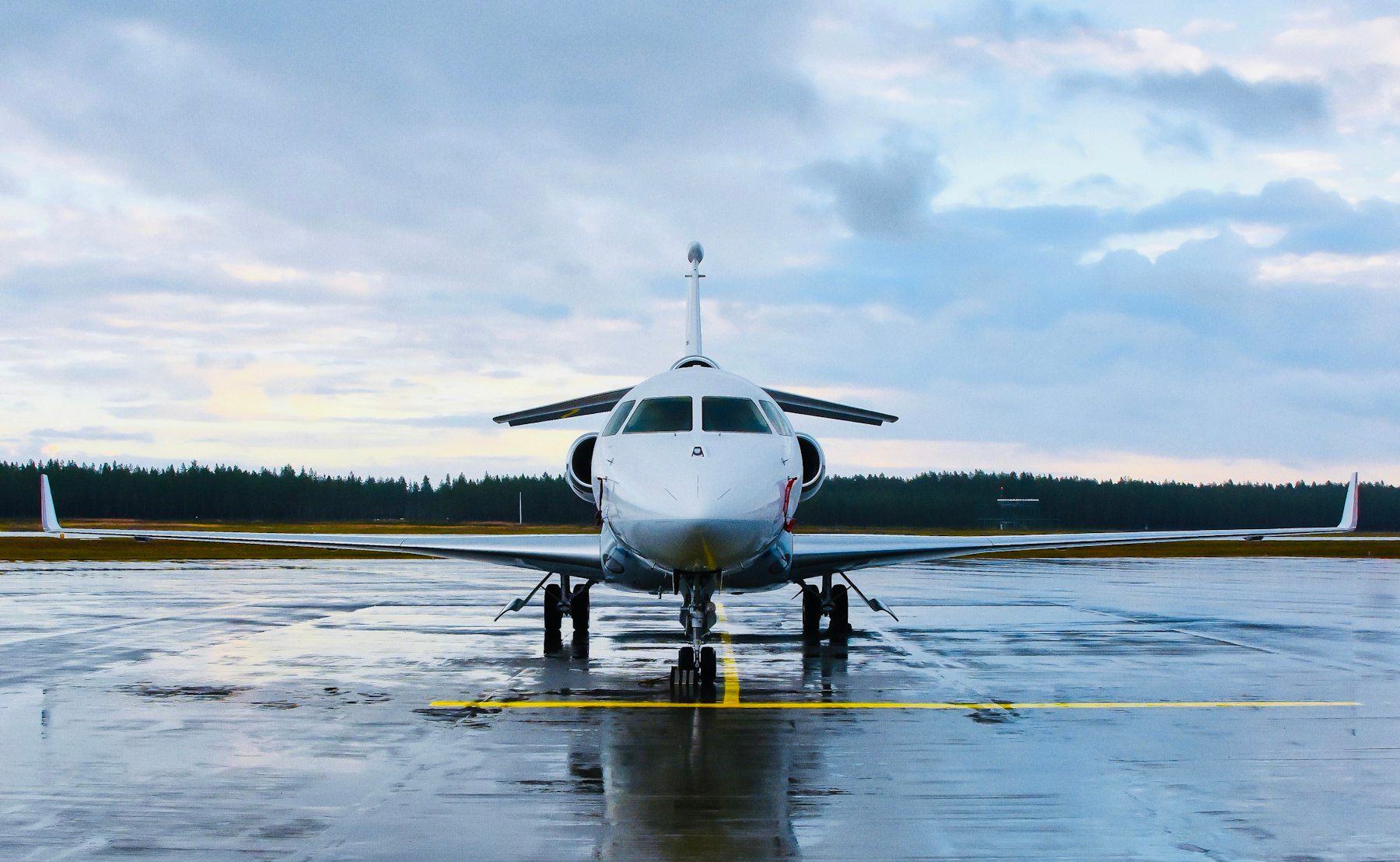
Yes. A charter jet flies in rain, low cloud and darkness on instruments, and most weather is routine. It waits, diverts or cancels when the reported weather is below the legal minimums for the runway, when thunderstorms sit across the route, or when ice is beyond what the aircraft is approved for. The operator and the pilot in command make that call, not the passenger and not the broker.
Bad weather is the most common reason a charter does not leave on time, and the least understood. The rules are specific. They say what visibility a charter needs to take off and land, and they put the decision with the operator and the pilot. Knowing them will not change the weather, but it explains what the crew is waiting for.
Do private jets fly in bad weather?
Yes. Charter jets fly in rain, low cloud and at night on instrument flight rules, and most weather never comes up. A flight is held, diverted or cancelled for a short list of reasons, each set by a rule or by the pilot:
- Visibility or cloud below the landing minimums at the destination, or forecast to be below them when the aircraft arrives.
- Visibility below the takeoff minimums at the departure airport.
- Thunderstorms on the route or over either airport.
- Ice: frost, ice or snow on the aircraft, or icing in flight beyond what the aircraft is approved for.
The table sets out what each rule says and what usually follows.
| Weather | What the rule says | What usually happens |
|---|---|---|
| Fog or low cloud at the destination | No departure unless the forecast at arrival is at or above landing minimums (14 CFR 135.219); no final approach unless the latest report is (135.225) | Wait for the forecast to improve, or plan into an alternate airport |
| Fog at the departure airport | Visibility at or above the takeoff minimum, often 1 statute mile for a twin-engine aircraft (14 CFR 91.175(f)); an alternate within an hour if below landing minimums (135.217) | Wait on the ground |
| Thunderstorms | The FAA’s guidance is to keep at least 20 miles from a severe storm and not to take off or land with one approaching | Hold, re-route or divert |
| Frost, ice or snow | No takeoff with contamination on the wings; a check or de-icing programme required (14 CFR 135.227) | De-ice, then go within the holdover time |
| Icing in flight | Light or moderate icing only with approved ice protection; severe icing only for aircraft certified for it (135.227) | Re-route or change altitude |
Can a private jet take off in fog?
Only if the visibility is at or above the takeoff minimum for that runway. 14 CFR 91.175(f) applies to charter operators: where the FAA has not published a minimum for the runway, the floor is 1 statute mile of visibility for an aircraft with two engines or fewer, and half a mile for one with more than two. Some operators are approved in their operations specifications for lower figures.
A second rule covers the gap between takeoff and landing weather. Under 14 CFR 135.217, if the departure airport is at or above takeoff minimums but below landing minimums, the aircraft may leave only if there is an alternate airport within one hour’s flying time. The point is simple: if something goes wrong after takeoff, the crew must have somewhere to land.
Those takeoff minimums bind charter, airline and certain other commercial operators. A privately owned jet flown by its owner under Part 91 is not bound by 91.175(f), which is why a charter sometimes waits while another aircraft leaves.
Can a private jet land in fog?
Only when the latest weather report is at or above the landing minimums for the approach in use. Under 14 CFR 135.225, a charter pilot may not begin the final approach unless the reported weather meets the minimums for that procedure. The check starts before departure: 135.219 forbids taking off at all unless the reports or forecasts show the destination at or above landing minimums at the expected time of arrival.
Three details change the numbers:
- The pilot’s experience on type. A captain of a turbine airplane with fewer than 100 hours as pilot in command on that type must add 100 feet to the decision height and half a mile to the visibility (135.225(e)).
- The alternate. An alternate airport can be named only if its forecast is at or above alternate minimums at the arrival time (135.221).
- Equipment. An operator approved for an enhanced flight vision system may begin some approaches below the published visibility (135.225(j)).
Nantucket shows how this works in practice. In ten years of airport weather reports, about one July hour in thirteen was near or below the lowest approach limits, which is why every summer trip in Teterboro to Nantucket carries a fallback to Hyannis.
Can a private jet fly through a thunderstorm?
No crew plans to. The FAA’s Aeronautical Information Manual tells pilots to avoid by at least 20 miles any thunderstorm identified as severe or giving an intense radar echo, not to land or take off in the face of an approaching thunderstorm, and to go around the whole area when storms cover six tenths of it.
In practice a line of storms means a hold on the ground, often under an FAA ground stop or delay program that applies to private jets as much as airliners, a longer route or, if the storms sit over the destination, a diversion.
Rough air away from storms is a different question, covered in do private jets feel more turbulence?
What happens with snow and ice?
The aircraft must be clean before takeoff. 14 CFR 135.227 bars a takeoff with frost, ice or snow adhering to the wings, control surfaces or instruments, and in conditions where ice can form it requires a contamination check within five minutes of takeoff or an approved de-icing programme. In flight, the same rule allows light or moderate icing only with working ice protection, and severe icing only for aircraft certified for it.
De-icing, holdover times and why a December departure from New York often runs late are covered in flying a private jet in winter.
Who decides whether a charter flies in bad weather?
The operator and the pilot in command. Under 14 CFR 135.77 the operator holds operational control, and under 14 CFR 91.3 the pilot in command is the final authority on the operation of the aircraft. A passenger cannot overrule them, and neither can a broker.
We are a broker, not an operator. We pass on what the operator decides, look for an alternative airport or time, and never ask a crew to fly in weather it has turned down. If a flight is stopped by a fault rather than the weather, when the plane breaks explains how a replacement aircraft is sourced.
What happens to your money if weather cancels a charter?
It depends on the charter agreement, so read the weather clause before you pay. Federal rules set one floor: under 14 CFR 295.26, an air charter broker must make prompt refunds of all money paid for charter air transportation when that transportation cannot be performed. Everything else, including rebooking, cancellation fees and who pays for a diversion, is contract.
Published terms show why the clause matters. Paramount Business Jets lists cancellation fees of 50 percent within two weeks of departure and 100 percent within three days, with no weather exception stated on that page. Other contracts treat a weather cancellation differently.
Ask four questions before you sign:
- If the operator cancels for weather, is the money refunded, credited or moved to a new date?
- If you choose not to fly in weather the operator would accept, is that a cancellation by you?
- If the flight diverts, who pays for the ground transport, the extra landing and any repositioning?
- If the crew runs out of duty time during a hold, who pays for the overnight?
How do you plan a charter around the weather?
Plan for the alternate, not just the destination, and leave a margin on any trip that cannot move.
- For an event you cannot miss, fly the day before. How far in advance to book covers the peak dates when a second attempt is hardest to arrange.
- Name the alternate at booking. Hyannis for Nantucket and Eagle County for Aspen are the usual ones on our routes.
- Keep the schedule flexible by an hour or two when storms or ice are forecast.
- Ask the operator what the aircraft and crew are approved for if your destination is often fogged in.
For how charter’s safety record compares with the airlines’, see is flying private safer than commercial.
If you would like a trip planned with the alternate named up front, call +1 (862) 485-3510 or request a quote and put the date you cannot miss in the notes.
Sources
- 14 CFR 135.217, IFR: takeoff limitations (eCFR, Title 14)
- 14 CFR 135.219, IFR: destination airport weather minimums (eCFR, Title 14)
- 14 CFR 135.221, IFR: alternate airport weather minimums (eCFR, Title 14)
- 14 CFR 135.225, IFR: takeoff, approach and landing minimums (eCFR, Title 14)
- 14 CFR 135.227, Icing conditions: operating limitations (eCFR, Title 14)
- 14 CFR 135.267, Flight time limitations and rest requirements (eCFR, Title 14)
- 14 CFR 135.77, Responsibility for operational control (eCFR, Title 14)
- 14 CFR 91.175, Takeoff and landing under IFR (eCFR, Title 14)
- 14 CFR 91.3, Responsibility and authority of the pilot in command (eCFR, Title 14)
- 14 CFR 295.26, Refunds (eCFR, Title 14)
- FAA Aeronautical Information Manual, chapter 7, section 1: thunderstorm flying (7-1-27)
- Paramount Business Jets: private jet rental cost, cancellation terms and fees
More questions people ask
Can a long weather delay leave the crew out of hours?
Yes. Under 14 CFR 135.267, a two-pilot charter crew may fly no more than 10 hours in 24, and a crew that goes over because of something like bad weather must then rest for at least 11 to 16 hours, depending on how far over it went. A long hold can mean a fresh crew or an overnight.
Does a bigger jet fly in worse weather?
Not because it is bigger. Landing limits come from the approach, the aircraft's equipment and the crew's qualification. An operator approved to use an enhanced flight vision system can begin some approaches in lower visibility under 14 CFR 135.225(j), whatever the cabin size.
Related articles
- What size private jet do you need?
Aircraft and flying
- Do private jets feel more turbulence?
Aircraft and flying
- How to charter a jet for a group of 20, 30 or 50
Aircraft and flying
Route guides
Flight times, prices and airport detail for trips where this applies.
- Houston Hobby to Aspen
Mountains
- Scottsdale to Jackson Hole
Mountains
Written by Jake Lombardi
Jake Lombardi is the managing director of Lombardi Jet Services. Fifteen years in private aviation and more than 1,000 charters arranged. About Jake
Plan this trip with Jake
Tell Jake your dates and how many are travelling, and he will come back with options and one clear price.
Request a quoteCall Jake: +1 (862) 485-3510
Lombardi Jet Services is an air charter broker. It is not a direct air carrier and does not have operational control of any aircraft. Flights are provided by properly licensed direct air carriers (FAA Part 135 operators, or foreign equivalents), which keep operational control. We act as our clients' agent.