How high do private jets fly?
By Jake Lombardi. Published . 5 min read.
The short answer
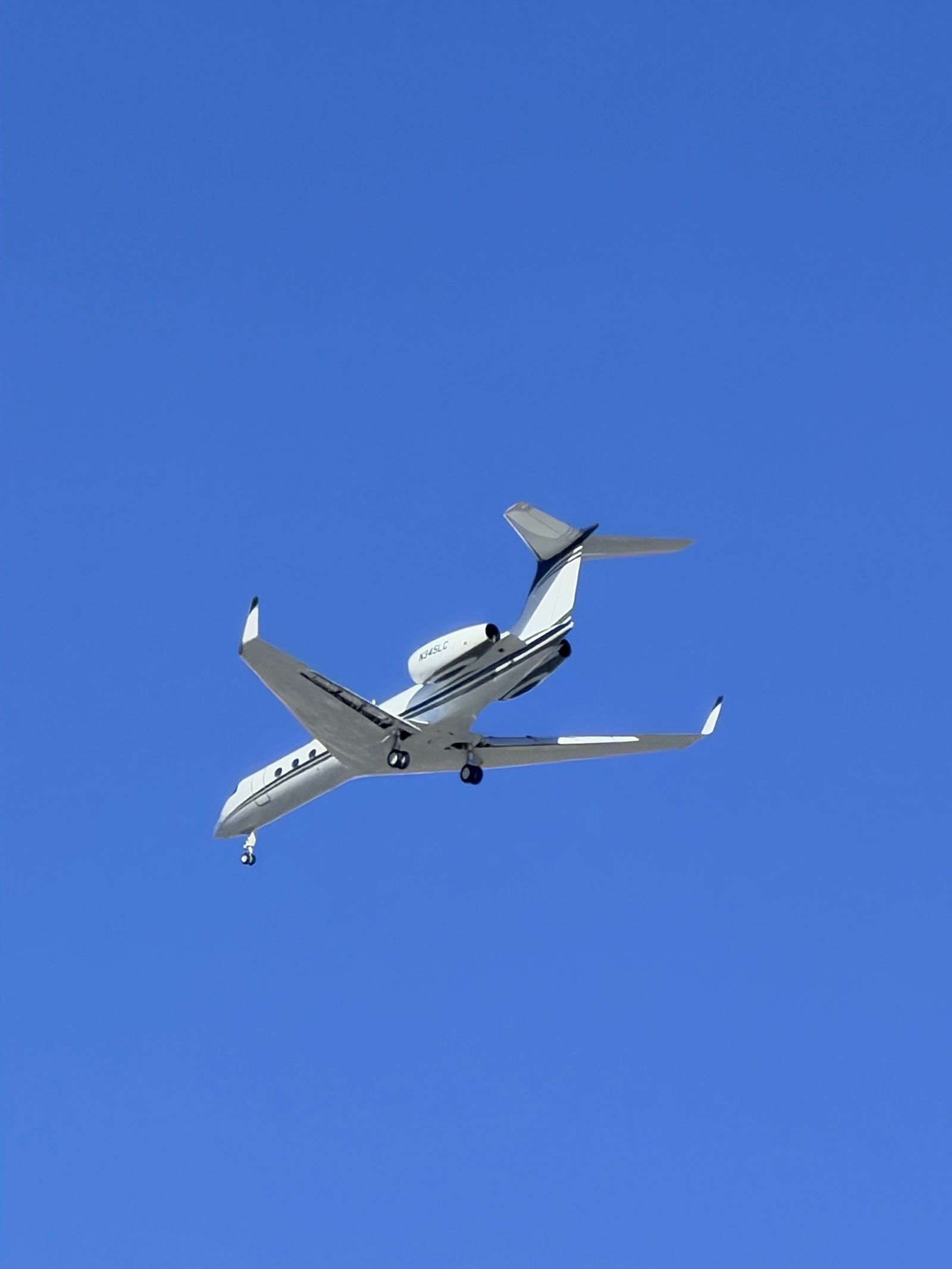
Higher than airliners. Embraer lists a maximum operating altitude of 45,000 feet for the Phenom 300E light jet and Bombardier 51,000 feet for the Global 7500, against 41,000 feet for current Boeing 737s in EASA's type certificate. Inside, 14 CFR 25.841 requires a cabin pressure altitude of not more than 8,000 feet in normal operation; the Phenom 300E's brochure gives 6,600 feet.
Private jets fly higher than airliners. Business jets are certified to between about 45,000 and 51,000 feet, against 41,000 feet for the Boeing 737 most people have flown on. What you breathe on board is a different number, the cabin altitude, and the rules hold that at or below 8,000 feet in normal flight however high the aircraft goes.
This page sets out the certified ceilings from the manufacturers’ own documents, what the cabin altitude is and why it matters more to how you feel, and the rules that govern flying up there. Lombardi Jet Services is a broker; it arranges charters on aircraft operated by Part 135 certificate holders, and the crew of the operator decides the altitude of each flight with air traffic control.
The short version
- A light jet can go higher than an airliner. Embraer lists the Phenom 300E’s maximum operating altitude as 45,000 feet; EASA’s type certificate gives current Boeing 737s 41,000 feet.
- The largest go to 51,000 feet. Bombardier’s Global 7500 factsheet gives a maximum operating altitude of 51,000 feet.
- You breathe the cabin altitude. 14 CFR 25.841 requires a cabin pressure altitude of not more than 8,000 feet in normal operation; the Phenom 300E brochure gives 6,600 feet.
- The ceiling is a limit, not a plan. The Global 7500’s factsheet gives an initial cruise altitude of 43,000 feet at maximum takeoff weight, 8,000 feet below its ceiling.
- Above 35,000 feet a pilot wears a mask. 14 CFR 135.89(b)(3) requires one pilot at the controls to wear a sealed oxygen mask on a charter above that height.
What is the maximum altitude of a private jet?
It depends on the model, and the manufacturer publishes it. The table below sets the certified ceilings we confirmed from primary documents beside the regulatory heights that shape a flight.
Embraer’s Phenom 300E brochure lists “Max. operating altitude: 45,000 ft” for the light jet. Bombardier’s Global 7500 factsheet lists “Maximum operating altitude 51,000 ft”. For comparison, EASA’s type certificate data sheet for the Boeing 737, issue 30 of October 28, 2026, gives the later 737 models a “Maximum Operating Altitude: 12,497 m (41,000 ft) pressure altitude”.
Other jets published on this site fall in the same range: the turbulence article lists 45,000 feet for the Citation Latitude and Challenger 3500 and 51,000 feet for the Gulfstream G700, from the makers’ pages. Your quote names the aircraft, and its own manufacturer’s figure is the one that applies.
How high do private jets usually cruise?
Lower than their ceiling, at a level chosen for each flight. The ceiling is the highest the aircraft is certified to fly; the crew picks a level for the weight, winds, weather and air traffic on the day, and air traffic control assigns it.
Weight is the clearest example. The Global 7500’s factsheet gives an “Initial cruise altitude (MTOW) 43,000 ft”: at maximum takeoff weight, the jet starts its cruise 8,000 feet below its 51,000-foot limit. A short flight may never get near the ceiling at all.
What is cabin altitude?
The pressure altitude inside the cabin, which is what your body feels. A jet at 45,000 feet is pressurized so the air inside matches the air at a much lower height.
The certification rule sets the limit. 14 CFR 25.841(a) says pressurized cabins “must be equipped to provide a cabin pressure altitude of not more than 8,000 feet under normal operating conditions.” Manufacturers compete on going lower. Embraer says “the Phenom 300E’s cabin altitude of 6,600 feet” is “the lowest in its class”. EASA’s 737 data sheet notes that 737s modified with Boeing’s “Lower Cabin Altitude” change can hold “a cabin altitude of 6500 feet in lieu of the standard 8000 feet when operating at a cruising altitude of 41,000 feet.”
If you have a heart or lung condition, the cabin altitude, not the flight altitude, is the figure to give your doctor; flying private with medical needs covers oxygen and the rest.
What happens if the cabin loses pressure?
The aircraft is built to limit your exposure, and the crew descends. 14 CFR 25.841(a)(1) says that if certification above 25,000 feet is requested, the airplane must be designed so that “occupants will not be exposed to cabin pressure altitudes in excess of 15,000 feet after any probable failure condition in the pressurization system”. After failures not shown to be extremely improbable, the limits are “Twenty-five thousand (25,000) feet for more than 2 minutes; or … Forty thousand (40,000) feet for any duration.”
The pilots’ oxygen rule reflects the same risk. Under 14 CFR 135.89(b), on a charter between 25,000 and 35,000 feet, unless each pilot has a quick-donning mask, one pilot at the controls must wear one that supplies oxygen “whenever the cabin pressure altitude exceeds 12,000 feet MSL”; above 35,000 feet, “at least one pilot at the controls shall wear, secured and sealed” such a mask. If you see a pilot wearing one at cruise, that is the reason.
Why do private jets fly higher than airliners?
Because they are certified to: a current 737’s limit is 41,000 feet, and many business jets can climb above it. Between 29,000 and 41,000 feet, air traffic control separates aircraft by 1,000 feet under the reduced vertical separation rules: Part 91 Appendix G says ATC “separates aircraft by a minimum of 1,000 feet vertically between FL 290 and FL 410 inclusive.” To use that band at all, an aircraft and its operator must meet Appendix G and be authorized, under 14 CFR 91.180(a).
A jet certified to 45,000 or 51,000 feet can also climb above that band. We found no primary source that measures how much time or fuel that saves on a given route, so this page gives no figure; the crew decides on the day, and how fast private jets fly covers the speeds themselves. Whether higher means smoother is answered in do private jets feel more turbulence: altitude gives the pilot more options, not immunity.
How Jake works
Jake names the operator and the aircraft in every quote, so the ceiling and cabin altitude that apply to your flight are the published figures for a specific type. He uses operators rated ARGUS Gold or Platinum, confirmed before quoting, and checks the operator’s record and the aircraft. If cabin altitude matters to you, for a medical reason or a long flight, say so when you ask for a quote and he will compare the aircraft on that figure.
To ask about a trip, call +1 (862) 485-3510 or request a quote.
Sources
- Embraer, Phenom 300E brochure, accessed November 17, 2026.
- Bombardier, Global 7500 factsheet, accessed November 17, 2026.
- EASA, Type certificate data sheet IM.A.120, Boeing 737, Issue 30 (October 28, 2026), accessed November 17, 2026.
- eCFR, 14 CFR 25.841, 91.180, Part 91 Appendix G and 135.89, read November 17, 2026 (text as of November 10, 2026).
The heights that shape a private jet flight
Certified ceilings for three aircraft, from the top down, beside the heights the federal rules set for the cabin, the pilots and air traffic control.
| Height | What happens there | Source |
|---|---|---|
| 51,000 ft | Maximum operating altitude of the Bombardier Global 7500 | Bombardier factsheet |
| 45,000 ft | Maximum operating altitude of the Embraer Phenom 300E, a light jet | Embraer brochure |
| 43,000 ft | Global 7500 initial cruise altitude at maximum takeoff weight | Bombardier factsheet |
| 41,000 ft | Maximum operating altitude of current Boeing 737 models; top of the 1,000-foot separation band | EASA TCDS IM.A.120; Part 91 Appendix G |
| Above 35,000 ft | On a charter, one pilot at the controls wears a sealed oxygen mask | 14 CFR 135.89(b)(3) |
| 29,000 to 41,000 ft | ATC separates aircraft by 1,000 feet; aircraft and operator must be authorized | 14 CFR 91.180(a); Part 91 Appendix G |
| Cabin, after a probable failure | Occupants not exposed to more than 15,000 ft cabin altitude (jets certified above 25,000 ft) | 14 CFR 25.841(a)(1) |
| Cabin, normal flight | Not more than 8,000 ft; Phenom 300E brochure gives 6,600 ft | 14 CFR 25.841(a); Embraer brochure |
More questions people ask
Why is one pilot wearing an oxygen mask?
Because the rule requires it at high altitude. Under 14 CFR 135.89(b)(3), whenever a pressurized aircraft on a charter flies above 35,000 feet, at least one pilot at the controls must wear a secured and sealed oxygen mask. It is a precaution against a sudden loss of pressure, not a sign that anything is wrong.
What happens if a private jet loses cabin pressure?
The certification rule limits what you can be exposed to. Under 14 CFR 25.841(a), an airplane certified above 25,000 feet must be designed so that, after any probable failure of the pressurization system, occupants are not exposed to a cabin altitude above 15,000 feet; after failures not shown to be extremely improbable, the limits are 25,000 feet for more than 2 minutes and 40,000 feet for any duration. The crew then descends.
Do you feel the altitude on a private jet?
You feel the cabin altitude, not the flight altitude. Transport-category jets must hold the cabin at or below 8,000 feet in normal operation under 14 CFR 25.841, and some manufacturers publish lower figures: 6,600 feet for the Phenom 300E, and 6,500 feet at 41,000 feet for Boeing 737s with the Lower Cabin Altitude change.
Does flying higher make a private jet faster?
Not by itself. The crew picks the level for each flight with air traffic control, and the highest is not always the one used. The Global 7500's factsheet lists an initial cruise altitude of 43,000 feet at maximum takeoff weight, 8,000 feet below its 51,000-foot ceiling.
Is the maximum altitude the cruising altitude?
No. The maximum operating altitude is a certified limit. On a given day the crew is assigned a level by air traffic control, chosen for weight, winds, weather and traffic, and a short flight may never climb near the limit.
Sources
- Embraer: Phenom 300E brochure (accessed November 17, 2026)
- Bombardier: Global 7500 factsheet (accessed November 17, 2026)
- EASA: Type certificate data sheet IM.A.120, Boeing 737, Issue 30 (accessed November 17, 2026)
- eCFR: 14 CFR 25.841, Pressurized cabins (accessed November 17, 2026)
- eCFR: 14 CFR 91.180, Operations within airspace designated as RVSM airspace (accessed November 17, 2026)
- eCFR: 14 CFR Part 91, Appendix G, Operations in RVSM airspace (accessed November 17, 2026)
- eCFR: 14 CFR 135.89, Pilot requirements: Use of oxygen (accessed November 17, 2026)
Related articles
- How fast do private jets fly?
Aircraft and flying
- Do private jets have beds?
Aircraft and flying
- Do private jets have life jackets and life rafts?
Aircraft and flying
Route guides
Flight times, prices and airport detail for trips where this applies.
- Teterboro to Van Nuys
Coast to coast
- Teterboro to Aspen
Mountains
- Teterboro to London
International

Written by Jake Lombardi
Jake is the managing director of Lombardi Jet Services. He has spent 15 years in private aviation and has arranged more than 1,000 charters. He holds a CPA license, volunteers with Backpacks for Life and collects art and memorabilia. About Jake
Plan this trip with Jake
Tell Jake your dates and how many are travelling, and he will come back with options and one clear price.
Request a quoteCall Jake: +1 (862) 485-3510
Lombardi Jet Services is an air charter broker. It is not a direct air carrier and does not have operational control of any aircraft. Flights are provided by properly licensed direct air carriers (FAA Part 135 operators, or foreign equivalents), which keep operational control. We act as our clients' agent.