Jet card, charter, fractional or owning
By Jake Lombardi. Published .
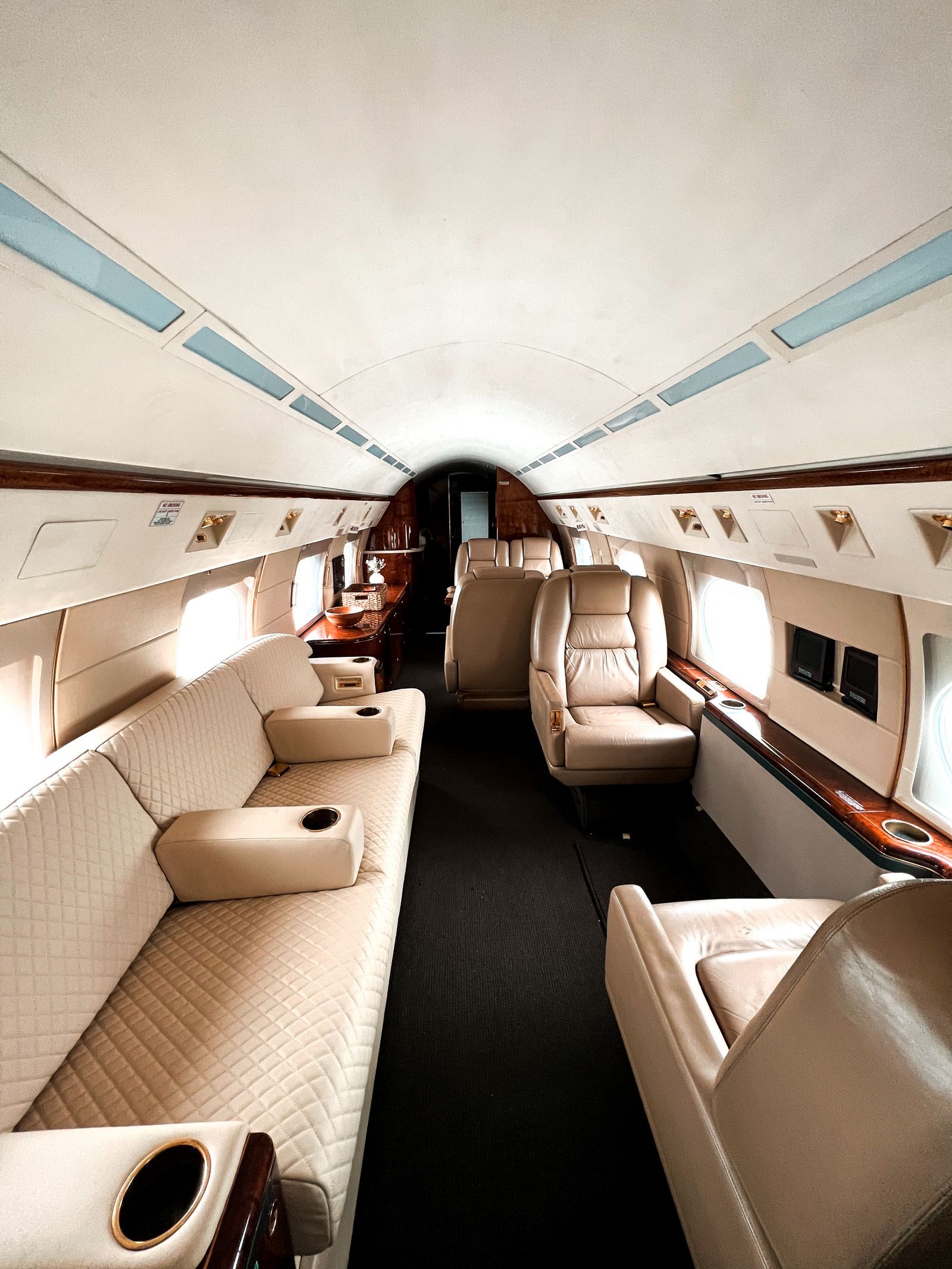
The short answer
There are four ways to buy private aviation and they are four contracts, not four prices. On-demand charter, a jet card, fractional ownership and full ownership differ most in one respect: what happens to your money in the months when the aircraft is not flying. Here is how each one works, what the FAA rules are underneath them, and how to work out which one you are actually buying.
Every conversation about private aviation pricing eventually arrives at the same confusion. Someone quotes $8,500 an hour, someone else quotes $5,200 an hour, and the first question is always the same: which one is cheaper?
Usually they are not comparable, because they are different products. A jet card and a fractional share are contracts with obligations attached. An on-demand charter is a transaction with none. The hourly rate is the part that is easiest to quote and the least informative.
Here is how the four models actually work, and how to work out which one suits the way you actually fly.
The one question that decides it
Before the hourly rate, before the aircraft, before the operator: how many hours a year do you fly, and are they predictable?
That is not a rhetorical question. It is the arithmetic. Every model below has a fixed cost that accrues whether or not the aircraft moves, and the fixed cost is where the difference lives.
| On-demand charter | Jet card | Fractional | Owning | |
|---|---|---|---|---|
| Annual hours | Under 50 | 50 to 150 | 150 to 300 | 250 and up |
| Commitment | None | Prepaid, often renewing | 24 to 60 month term | Capital purchase |
| Cost when idle | Nothing | Balance expires or rolls over | Full monthly charge | Full fixed cost |
| Aircraft is | Named per trip | Often a fixed fleet | A share of a specific aircraft | Yours |
| Who operates it | A Part 135 operator | Usually one operator | A management company | Yours or a contracted one |
Those hour bands are a rule of thumb, not a rule, and the boundaries move. But the direction never does.
On-demand charter
This is the simplest model and the one most people picture when they say “private jet”. You ask for a flight, an operator proposes an aircraft, you pay, you fly. There is no commitment and nothing accrues while you are not flying.
The regulatory position is worth understanding, because it is what makes this model work. Almost every on-demand private flight in the United States is operated by a Part 135 certificate holder, and Part 135 is the part of the FAA’s rules that governs commuter and on-demand operations. Under 14 CFR 135.1(a)(1), Part 135 prescribes the rules governing the commuter or on-demand operations of each person holding an Air Carrier Certificate or Operating Certificate under Part 119.
That is the rulebook the operator works from, and it is why the operator’s certificate, the aircraft and the crew are worth asking about. It is also why the safety page exists on this site.
The trade-off: you pay the full cost of a dedicated aircraft for every flight, and the aircraft is not where you want it unless you book early. Peak dates are expensive and constrained.
The honest version: for someone who flies five or six times a year, with different destinations each time, on-demand charter is almost always the right answer. The fixed-cost models are built for people who are going to fly anyway, every month, and the arithmetic only works at volume.
Jet cards
A jet card is a prepaid balance or a committed block of hours at a negotiated rate, usually with a fixed fleet and a fixed operator behind it.
The product on offer is typically:
- a deposit, often refundable, against a balance
- an hourly rate below the operator’s standard charter rate
- sometimes a fixed fleet, sometimes a choice of aircraft
- an expiry period on the balance, and sometimes a monthly or annual renewal obligation
- sometimes a fee for a change of aircraft, a change of operator, or a cancelled flight
The trap is the unused balance. A card at a good rate that you only use half of is not a good deal. A card with a $5,000 annual renewal fee on a $200,000 balance is a lot cheaper than it looks only if you fly it.
The other trap is the fleet restriction. If the card is for a specific operator with a specific set of aircraft, you are trading flexibility for rate. On a heavy-demand date, when the card’s aircraft is committed elsewhere and the operator cannot substitute, you have less recourse than a client who booked on demand.
What to check before signing: the expiry period, the renewal obligation, the cancellation fee, the change-of-aircraft policy, the blackout periods, and who the operator is. A jet card is a financial product with an aviation component, and the aviation component is the part that is hard to replace.
Fractional ownership
Fractional ownership is a share of a specific aircraft, usually sold in 1/16th increments, with a management company operating the fleet.
The structure:
- an initial payment, then a monthly one for a term of 24 to 60 months
- the share buys hours, and the hours are scheduled against the fleet
- a management company holds the operating certificate, employs the crew, and does the maintenance
- the share is an asset, and it depreciates, and it can be sold
The trade-off: the hourly rate can be genuinely lower than charter, because the owner is committed to the aircraft whether or not it flies, so the fixed costs are spread. But you get that rate by committing capital and accepting a schedule.
The scheduling reality: a fractional owner books against a fleet, not a tail number. When you want to fly, you want an aircraft in your share’s class, on a day the fleet can do it. The operator’s other owners have the same claim on the same aircraft, and the schedule works in the order people booked. Advance notice is the price of the lower rate.
The tax treatment is different, and this is the other reason people choose it. Section 4261(e)(5) of the Internal Revenue Code provides that no tax is imposed under that section or section 4271 on amounts paid by an aircraft owner for aircraft management services related to the maintenance and support of the owner’s aircraft, or to flights on the owner’s aircraft. The definition of aircraft management services is broad: scheduling, flight planning, weather forecasting, insurance, maintenance, storage, fuelling, hiring and training of pilots and crew, and safety standards.
What to check before signing: the term, the monthly rate, the schedule priority, the hours included, the overage rate, the management fee, and what happens to the share at the end of the term. And speak to an accountant who does aircraft, before signing, not after.
Owning the aircraft
You buy the aircraft. You are the owner.
The full ownership model is a real operating business, and it should be treated as one. The fixed costs are substantial and they are monthly:
- the purchase or lease, and the depreciation or the lease rate
- insurance, hull and liability
- maintenance and the unscheduled maintenance that every aircraft eventually needs
- the hangar
- the crew, and the pilot and maintenance training that Part 135 requires
- the management, if you do not run it yourself
- fuel, which is the only variable, and is 20 to 30 percent of the cost of a short trip
The regulatory path is the first decision. For a Part 135 operation, the operator’s minimum insurance is set by 14 CFR Part 205. Under 205.5(b)(1), a U.S. or foreign direct air carrier must maintain third-party aircraft accident liability coverage with minimum limits of $300,000 for any one person in any one occurrence and a total of $20,000,000 per involved aircraft for each occurrence, except that for aircraft of not more than 60 seats or 18,000 pounds maximum payload capacity, the carrier need only maintain $2,000,000 per involved aircraft for each occurrence. Passenger liability coverage under 205.5(b)(2) must be at least $300,000 for any one passenger and a total per involved aircraft of $300,000 times 75 percent of the number of passenger seats installed.
There is a smaller regime, and it is the one most people who own a single aircraft actually live in. Under 14 CFR Part 298, an air taxi operator is a carrier that does not directly or indirectly utilise large aircraft, does not hold a certificate of public convenience and necessity, does not engage in scheduled passenger operations, maintains liability insurance in compliance with Part 205, and has registered with the Department of Transportation. Commuter air carriers are the other classification, and they must carry passengers on at least five round trips a week on at least one route according to published schedules, and hold a Commuter Air Carrier Authorization.
The Part 298 insurance limits are much smaller than Part 205’s. Under 205.5(c), a U.S. air taxi operator must maintain third-party liability coverage of at least $75,000 for any one person in any one occurrence and $300,000 per involved aircraft for each occurrence, plus at least $100,000 per occurrence for property damage. Passenger coverage under 205.5(c)(2) is $75,000 for any one passenger and $75,000 times 75 percent of the seats installed.
The trade-off: maximum flexibility once the aircraft is on the ground and the crew is hired, and the asset is yours. The risk: an aircraft that flies 100 hours a year costs the same to own as one that flies 400, and the difference is entirely borne by you.
What the answer usually is
From the conversations Jake has, the pattern is consistent:
- Under about 50 hours a year, unpredictable: on-demand charter. Nothing else makes the arithmetic work.
- 50 to 150 hours, consistent, and you want rate certainty: a jet card, if the fleet restrictions and expiry terms suit you. Otherwise, on-demand charter with a negotiated relationship.
- 150 to 300 hours, and you want the asset and the lower rate: fractional, after a conversation with an accountant who does this.
- Over 250 hours, with a real organisation behind it: ownership, run properly, with a professional management company.
And there is a fifth answer that is often the right one and is rarely proposed: do not own anything yet, and fly more. A client who flies twenty hours a year for three years learns more about what they actually need than a client who buys an aircraft in year one.
What Jake checks
Before quoting, Jake establishes the flying pattern: hours per year, how predictable, how many distinct destinations, and whether the aircraft would be the same most of the time. Then he prices the on-demand option against it, because that is the option that requires no commitment and no explanation.
Where the pattern genuinely points at a jet card, a fractional share or an aircraft, he says so. He does not sell those products, and he will not pretend otherwise, but a client who buys a fractional share when they should have chartered has been badly advised, and that is a bad outcome for the client’s business as well as for this one.
If you want the arithmetic run on your own flying, call +1 (862) 485-3510 or request a quote. Put the annual hours and the typical leg in the notes, and ask for the on-demand price as well. Then you can compare the two against each other rather than against a brochure.
Sources
- 14 CFR 135.1, Applicability (eCFR, Title 14, Part 135)
- 14 CFR 298.3, Classification of air taxi operators and commuter air carriers (eCFR, Title 14, Part 298)
- 14 CFR 205.5, Minimum coverage (eCFR, Title 14, Part 205)
- 26 U.S.C. § 4261, Imposition of tax, including the aircraft management services exemption at (e)(5) (Cornell Legal Information Institute)
- 14 CFR Part 119, Air Carrier Certificates and Operating Certificates (eCFR, Title 14)
The four ways to buy it
Four contracts, not four prices. The row that decides most comparisons is what it costs when the aircraft does not fly.
| On-demand charter | Jet card | Fractional ownership | Full ownership | |
|---|---|---|---|---|
| Commitment | None. You pay for the flight you take. | A deposit, and usually a monthly or annual renewal obligation. | Typically 24 to 60 months, with an initial and monthly payment. | A capital purchase, then operating cost every month. |
| Aircraft | Named in the quote, with the operator and the tail number. | Often restricted to a specific fleet or a specific operator. | A share of a specific aircraft in a managed fleet. | Yours. The tail number is on your certificate of registration. |
| Flexibility | Total on timing and aircraft, subject to availability. | Lower when the card has blackout periods, slot rules or a fixed fleet. | You book against the fleet. Scheduling ahead is the price of flexibility. | Maximum, once the aircraft is on the ground and the crew is hired. |
| Suits | Trips that happen. A handful of flights a year, each one different. | A steady flying pattern, roughly a few legs a month, where the rate matters more than the aircraft. | High annual utilisation spread over several aircraft, where tax and asset treatment matter. | Roughly 250 hours a year or more, and an organisation that wants the asset. |
| What you buy | A single flightThe hourly rate, the flight, and the handling. | A block of hoursPrepaid or committed at a negotiated hourly rate. | A fractional share of an aircraftUsually expressed as a 1/16th or 1/32nd share. | The aircraftPlus insurance, maintenance, crew, fuel, hangar and management. |
| Cost when unused | NothingNo retainer, no monthly minimum, no obligation to fly. | It expires or rolls over by termsRead the expiry and the fee schedule before you sign. | You still payMonthly management and ownership costs accrue whether the aircraft flies. | Full fixed costEverything except fuel accrues whether it flies or not. |
| Who operates it | A Part 135 operatorYou deal with the certificate holder, not a fund. | Often one operatorThe card is the product, and the operator behind it is fixed. | A management companyOne operator runs the fleet, and the contract names it. | Your own operation, or a contracted onePart 135 for hire, Part 121 for your own passengers, or a management company. |
The break-even is not a number you can look up. It is a number you can compute.The honest version: the more hours you fly and the more consistent they are, the more the fixed-cost models start to make sense. The fewer flights you take, the more the on-demand model wins, because you are not paying for aircraft that is not moving.
Jake does not sell jet cards, fractional shares or aircraft. When one of those is the right answer, he will say so and name the sort of company to talk to, because the cost of a bad charter is far higher than the cost of no charter.
If you want the arithmetic run on your own flying, call+1 (862) 485-3510 orrequest a quote and put the annual hours and the typical leg in the notes.
Written by Jake Lombardi
Jake Lombardi is the managing director of Lombardi Jet Services. Fifteen years in private aviation and more than 1,000 charters arranged. About Jake
Plan this trip with Jake
Tell Jake your dates and how many are travelling, and he will come back with options and one clear price.
Request a quoteCall Jake: +1 (862) 485-3510
Lombardi Jet Services is an air charter broker. It is not a direct air carrier and does not have operational control of any aircraft. Flights are provided by properly licensed direct air carriers (FAA Part 135 operators, or foreign equivalents), which keep operational control. We act as our clients' agent.