Can people track your private jet flight?
By Jake Lombardi. Published .
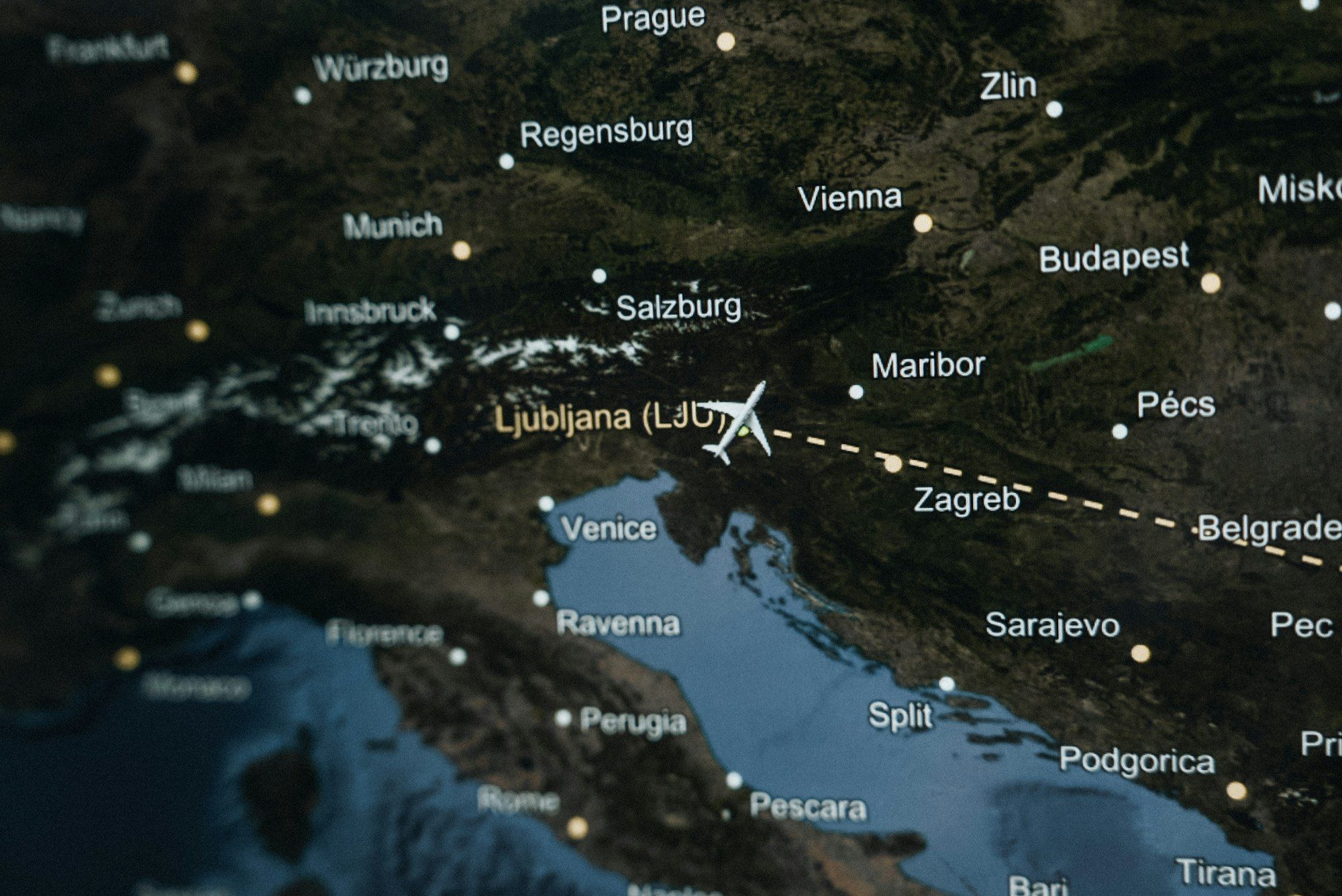
The short answer
Usually, yes. Most jets are required to broadcast their position by ADS-B, and flight-tracking sites display those signals and the FAA's own flight data. The FAA offers two privacy programs: LADD, which filters an aircraft out of the data the FAA shares with tracking sites, and PIA, which gives an aircraft a temporary address that is not linked to its owner. Both are requested by the aircraft's owner or operator, so on a charter whether your flight is hidden depends on the aircraft, not on you.
Flight-tracking sites have made private aviation unusually visible. Accounts that follow well-known people’s jets post their departures in near real time, and anyone can type a registration number into a free website. So it is a fair question for a charter client: can people see where I am going?
The answer depends on the aircraft, not on the passenger. Here is how tracking works, what the FAA’s privacy programs do, and what that means on a charter.
How do flight trackers see private jets?
Two ways. Aircraft broadcast their own position, and the FAA shares flight data.
ADS-B. Under 14 CFR 91.225, aircraft flying in most controlled airspace must be equipped with ADS-B Out, which broadcasts the aircraft’s position, altitude, speed and a unique address. Anyone with a receiver can pick those signals up. The FAA says so plainly: ADS-B Out transmits the aircraft’s unique address, “making identification by any individual with an ADS-B receiver possible”.
FAA data. The FAA also distributes flight data, including flight plans, through a data feed that commercial tracking companies subscribe to.
Tracking sites combine the two. Some rely mostly on the FAA’s feed; others build their picture from their own networks of ground receivers.
What is LADD?
The FAA’s Limiting Aircraft Data Displayed program. It lets an aircraft’s owner or operator have the aircraft’s flight data filtered out of what the FAA shares. Vendors who receive the FAA’s data feed sign an agreement that binds them to filter any LADD aircraft from public display. The FAA runs it under Section 803 of the FAA Reauthorization Act of 2024.
There are two levels:
- FAA source: the aircraft’s data is limited to FAA use and is not passed to outside vendors at all.
- Subscriber level: the data goes to vendors, but they may show it only to people the owner or operator has authorized.
Requests are made by the owner or operator, or its authorized representative, and the FAA applies them on the first Thursday of each month.
LADD works through the FAA’s data feed. A site that builds its picture from its own receivers is picking up the aircraft’s ADS-B broadcast directly, which is the gap the second program addresses.
What is PIA?
The FAA’s Privacy ICAO Address program. Every aircraft’s ADS-B transmitter broadcasts a permanent 24-bit address registered to that aircraft. Under PIA, an eligible owner can request an alternate, temporary address “which will not be assigned to the owner in the Civil Aircraft Registry”. Someone with a receiver still sees an aircraft, but cannot match the address to the registration and owner.
To qualify, the aircraft must be US-registered, equipped with 1090 MHz ADS-B, flying in US-managed airspace, and using a third-party call sign from a provider with a security agreement with the FAA, so that air traffic control does not hear the registration either. The FAA can still identify the aircraft for security agencies.
What can people see, and what can be hidden?
| What | Who can see it | Can it be limited? |
|---|---|---|
| The aircraft’s position, in real time | Anyone with an ADS-B receiver, and tracking sites | The position cannot be hidden. PIA hides which aircraft it is |
| Flight plans and FAA flight data | Tracking companies that subscribe to the FAA feed | Yes, with LADD |
| The aircraft’s registration and owner | Anyone, through the FAA aircraft registry | The registry is public. PIA breaks the link to the broadcast address |
| The passenger list | The operator; CBP on international trips | Not published |
What does this mean on a charter?
That privacy is a feature of the aircraft. LADD and PIA are requested by the aircraft’s owner or operator. As a charter passenger you cannot enroll the aircraft for your trip, and a flight on an aircraft that is not enrolled will appear on tracking sites under the aircraft’s registration or the operator’s call sign. The operator is the certificate holder that controls the aircraft; Part 91 vs Part 135 explains who that is on your flight.
Your name is not part of that data. A tracker shows an aircraft flying from one airport to another, not who was on board.
If privacy matters for a trip, the useful steps are:
- Say so when you ask for a quote. The broker can ask operators which of their aircraft are enrolled in LADD or PIA.
- Choose the aircraft accordingly where there is a choice. On a busy date there may not be.
- Keep the trip details close. The flight data is one route to your plans; the people who know your travel are usually another.
How Jake can help
If privacy matters, tell Jake when you ask for a quote. He can ask the operators he is quoting whether their aircraft are enrolled in LADD or PIA, and tell you which are before you choose. No one can honestly promise a flight will be invisible: an aircraft’s position is broadcast whichever program it uses.
To plan a trip, call +1 (862) 485-3510 or request a quote, and mention privacy in the notes.
Sources
More questions people ask
Can someone see my name on a flight tracker?
Not from the flight data. Tracking sites show the aircraft, its registration or call sign and its route, not the passenger list. Charter passenger manifests go to the operator and, on international trips, to CBP; they are not published.
Can I make my charter flight private?
Not by yourself. LADD and PIA are requested by the aircraft's owner or operator. What you can do is ask, before booking, whether the aircraft being quoted is enrolled in either, and choose accordingly where there is a choice.
Does turning off the transponder hide a jet?
No, and it is not an option. ADS-B Out must be transmitting in the airspace where 14 CFR 91.225 requires it, which includes the busy airspace around major cities and most of the airspace jets cruise in.
Can people see where a private jet is parked?
Tracking sites show where a flight landed, and the FAA's aircraft registry is public, so a registration number can be looked up. Where the aircraft parks at the airport is not published by the FAA.
Related articles
- Do you need a REAL ID to fly private?
Airports and operations
- Can a private jet land at JFK or LaGuardia?
Airports and operations
- Teterboro FBOs: which terminal, and where you clear customs
Airports and operations


Written by Jake Lombardi
Jake Lombardi is the managing director of Lombardi Jet Services. Fifteen years in private aviation and more than 1,000 charters arranged. About Jake
Plan this trip with Jake
Tell Jake your dates and how many are travelling, and he will come back with options and one clear price.
Request a quoteCall Jake: +1 (862) 485-3510
Lombardi Jet Services is an air charter broker. It is not a direct air carrier and does not have operational control of any aircraft. Flights are provided by properly licensed direct air carriers (FAA Part 135 operators, or foreign equivalents), which keep operational control. We act as our clients' agent.