Do private jets have two pilots?
By Jake Lombardi. Published . 6 min read.
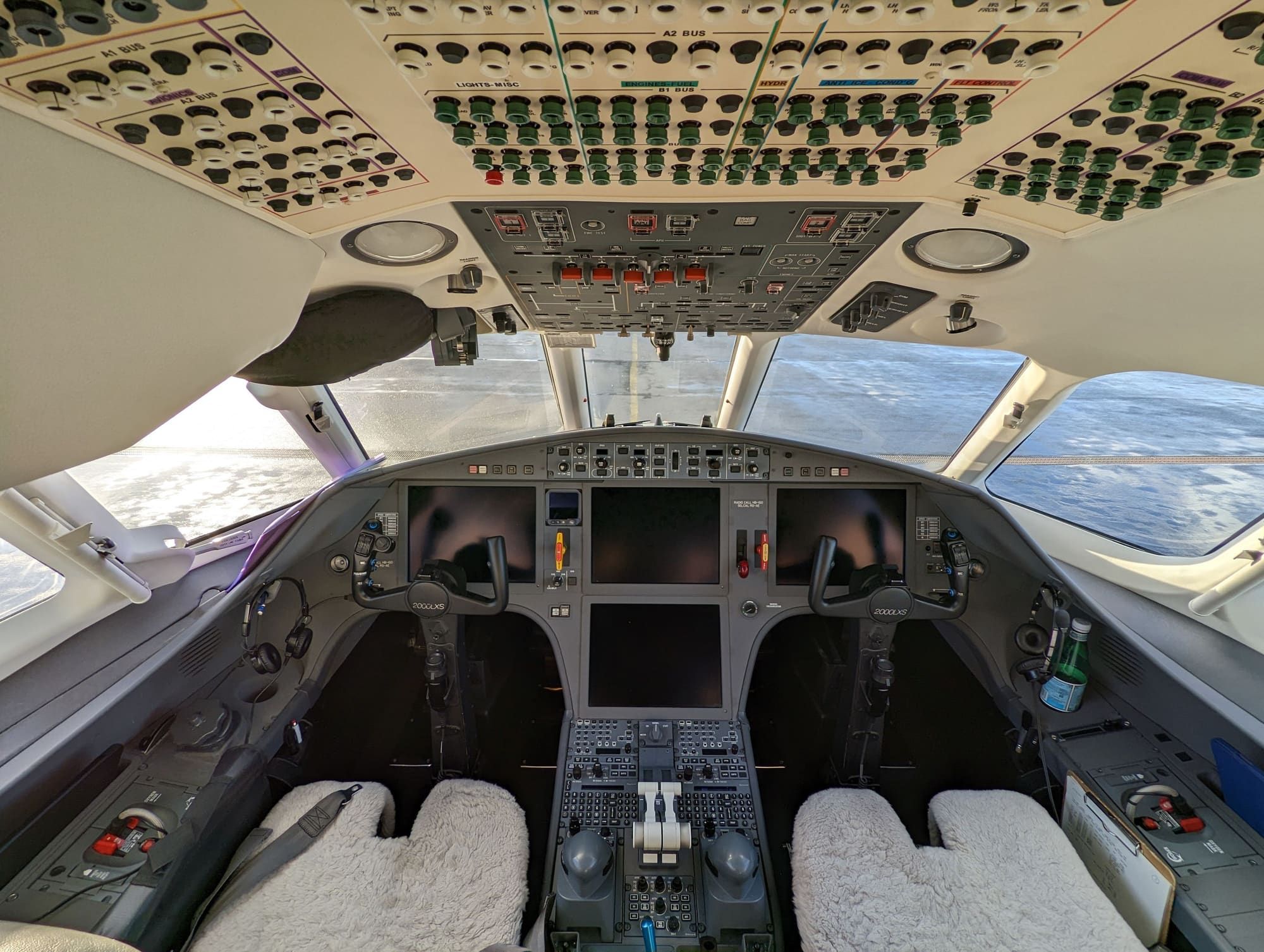
The short answer
Not always. Some light jets, such as the Citation CJ series and the Phenom 300, are certified for one pilot. On a charter, 14 CFR 135.101 requires a second pilot for any passenger flight under instrument flight rules unless the FAA has approved an autopilot in its place, and 135.99 requires one on any aircraft with 10 or more passenger seats.
On this page
- The short version
- Which private jets can be flown by one pilot?
- When does a charter need a second pilot?
- What is the autopilot exception?
- What about an owner flying their own jet?
- How experienced must a charter captain be?
- How often are charter pilots checked?
- What should you ask before you book?
- How Jake works
- More questions people ask
- Sources
Most private jets fly with two pilots, but not all of them have to. A handful of light jets are certified to be flown by one pilot, and an owner flying one under Part 91 may legally fly alone. A charter is held to more. Lombardi Jet Services arranges charters, so this page sets out the rules that decide how many pilots are at the front of a charter flight, how experienced they must be, and how often they are checked.
The rules are in 14 CFR Part 135 for charter and Part 91 for private flying, as they stand on November 11, 2026.
The short version
- Some jets need only one pilot by design. The FAA’s report on the Cessna Citation CJ series says the minimum crew “is one pilot in the left seat”, and the Phenom 300 is also certified for one pilot.
- A charter in cloud needs two, with one exception. 14 CFR 135.101 requires a second pilot on any passenger flight under instrument flight rules, unless the FAA has approved an autopilot in its place under 135.105.
- Ten passenger seats or more always means two. 135.99(b) requires a second in command on any charter aircraft with 10 or more passenger seats.
- The captain of a charter jet holds an airline pilot certificate. 135.243(a)(1) requires an airline transport pilot certificate to command any turbojet carrying passengers.
- Charter pilots are checked every six months. An instrument proficiency check every six calendar months, and a competency check and a line check every twelve.
Which private jets can be flown by one pilot?
Only those whose type certificate says so. The FAA’s Flight Standardization Board report for the Cessna 525 series, which covers the Citation CJ, CJ1, M2, CJ2, CJ3 and CJ4, states that “the minimum crew determination listed in the AFM and the TCDS is one pilot in the left seat.” Aviation Week’s overview of the Phenom 300E describes it as certified for single-pilot operation, with up to 10 passengers when one pilot flies it.
Where the flight manual sets a two-pilot minimum, the question does not arise under any rule: 135.99(a) bars a charter operator from flying with fewer than the minimum crew in the aircraft’s flight manual, and 91.531 requires a second pilot on a private flight in any airplane type certificated for more than one pilot. Ask the operator which applies to the aircraft in your quote.
When does a charter need a second pilot?
In three cases, under three rules:
- When the aircraft needs two by design. 14 CFR 135.99(a): no certificate holder may operate an aircraft “with less than the minimum flight crew specified in the aircraft operating limitations or the Aircraft Flight Manual”.
- When it has 10 passenger seats or more. 135.99(b): no charter operator may fly an aircraft “without a second in command if that aircraft has a passenger seating configuration, excluding any pilot seat, of ten seats or more.”
- When it carries passengers under instrument flight rules. 135.101: “Except as provided in § 135.105, no person may operate an aircraft carrying passengers under IFR unless there is a second in command in the aircraft.”
The third rule is the one that matters for single-pilot jets. Any flight in Class A airspace, which in the US begins at 18,000 feet, must be conducted under IFR under 14 CFR 91.135. A jet climbing to its cruising altitude is therefore on an IFR flight, which is also why it cannot fly around an air traffic control outage, so a single-pilot jet on a charter carries two pilots unless the operator holds the exception.
What is the autopilot exception?
14 CFR 135.105 lets an operator fly without a second in command if the aircraft “is equipped with an operative approved autopilot system and the use of that system is authorized by appropriate operations specifications.” The FAA grants it only if the autopilot can control the aircraft about all three axes and the operator shows it can fly that way safely, and it can attach conditions.
The exception does not override the other two rules. It cannot reduce a two-pilot aircraft to one pilot, and it cannot apply to an aircraft with 10 or more passenger seats. In practice it is an operator-by-operator authorisation, which is why the right question to ask is not “is this jet single-pilot” but “will this trip have two pilots”.
What about an owner flying their own jet?
Part 91 asks for less. 14 CFR 91.531 requires a second in command on any airplane type certificated for more than one pilot, any large airplane and any commuter-category airplane, and expressly allows “any airplane certificated for operation with one pilot” to be flown by one pilot, in cloud or not.
The owner still needs a type rating to command any turbojet under 14 CFR 61.31, and a proficiency check every 12 calendar months under 61.58, with one in the specific type every 24. AOPA’s 2012 review of single-pilot jet accidents concluded that “it seems prudent for private operations to adopt the more stringent for-hire rule.” That is a recommendation, not a rule.
How experienced must a charter captain be?
For a jet, the captain must hold an airline transport pilot certificate. 14 CFR 135.243(a)(1) says no one may serve as pilot in command in passenger-carrying operations “of a turbojet airplane” unless that person “holds an airline transport pilot certificate with appropriate category and class ratings and, if required, an appropriate type rating for that airplane.” The same applies to any airplane with 10 or more passenger seats.
Turboprops and piston aircraft under 10 seats have a lower floor. A captain flying them under instrument rules needs at least 1,200 hours as a pilot, “including 500 hours of cross country flight time, 100 hours of night flight time, and 75 hours of actual or simulated instrument time”, under 135.243(c)(2). The second pilot needs at least a commercial certificate and an instrument rating under 135.245.
How often are charter pilots checked?
More often than private pilots. Part 135 sets three recurring checks, each tracked in calendar months:
- Instrument proficiency check, every 6 months for any captain flying under IFR (135.297).
- Written or oral test and competency check, every 12 months, in the specific type for a jet (135.293).
- Line check, every 12 months, a flight check on the operator’s routes (135.299).
On top of those, charter pilots fall under the FAA’s drug and alcohol testing programme in 14 CFR Part 120, and their flight time and rest are capped by 135.267: 8 hours of flying for a one-pilot crew and 10 for two, inside a duty day of no more than 14 hours.
What should you ask before you book?
Three questions, answered in writing:
- How many pilots will fly this trip? If the aircraft is single-pilot certified, ask whether the operator holds the autopilot authorisation and whether it will use it on your flight.
- Who are they? The captain’s certificate and hours, and how long both pilots have flown this type.
- When was their last check? The answer should fall inside the 6-month and 12-month windows above.
How Jake works
Jake names the operator and the aircraft in every quote, deals with the certificate holder directly, and checks the operator’s record and the aircraft. He uses operators rated ARGUS Gold or Platinum, confirmed before he quotes, and often meets the crew on the ramp at Teterboro, Westchester and Farmingdale. Ask him the three questions above and he will put them to the operator before you confirm.
Who flies the jet: a charter against a private flight
The same aircraft can be flown under either set of rules. What changes is who must be at the front and how often they are checked.
| Charter (Part 135) | Private flight (Part 91) | |
|---|---|---|
| Two pilots required when | The flight manual requires two; 10 or more passenger seats; or passengers under IFR, unless an autopilot is approved (135.99, 135.101, 135.105) | The type is certificated for more than one pilot, or is a large or commuter-category airplane (91.531) |
| Single-pilot jet in cloud | Two pilots, unless the operator holds autopilot approval in its operations specifications (135.105) | One pilot allowed (91.531(b)(1)) |
| Captain of a passenger jet | Airline transport pilot certificate and type rating (135.243(a)(1)) | Type rating for any turbojet (61.31) |
| Second pilot | Commercial certificate and instrument rating (135.245) | Meets 61.55 when a second pilot is required |
| Recurring checks | Instrument check every 6 months; competency and line checks every 12 (135.297, 135.293, 135.299) | Proficiency check every 12 months, in type every 24 (61.58) |
| Flight time limits | 8 hours for one pilot, 10 for two, in a duty day of up to 14 hours (135.267) | None in Part 91 for private flights |
| Drug and alcohol testing | Yes, for flight crewmembers (120.1, 120.105) | No, except air tours under 91.147 |
More questions people ask
Can I ask for two pilots on a single-pilot jet?
Yes. The rules set a minimum, not a maximum. Ask the operator before you book whether it crews the aircraft with two pilots on your trip, and get the answer in writing in the quote.
Are charter pilots drug and alcohol tested?
Yes. Under 14 CFR 120.1 and 120.105, Part 135 certificate holders must test employees who perform flight crewmember duties. The testing rules do not cover an owner flying their own jet under Part 91, apart from certain air tour operators.
How long can a charter pilot fly in one day?
On unscheduled flights, 14 CFR 135.267 limits flight time to 8 hours for a one-pilot crew and 10 hours for a two-pilot crew within a duty period of no more than 14 hours, with 10 consecutive hours of rest before and after. A pilot may also not exceed 1,400 flight hours in a calendar year.
Does a second pilot need the same qualifications as the captain?
No. Under 14 CFR 135.245, a second in command on a charter must hold at least a commercial pilot certificate with an instrument rating, and under IFR must have flown six instrument approaches, holding and course tracking in the previous six calendar months. The captain of a passenger jet must hold an airline transport pilot certificate.
Is a two-pilot crew safer?
The FAA's rules treat it as the safer default for passengers in cloud and on larger aircraft. A 2012 AOPA review of single-pilot jet accidents suggested that private operators adopt the stricter for-hire rule. We have not found an official accident rate comparing one-pilot and two-pilot jets, so we do not quote one.
Sources
- eCFR: 14 CFR 135.99, Composition of flight crew (accessed November 11, 2026)
- eCFR: 14 CFR 135.101, Second in command required under IFR (accessed November 11, 2026)
- eCFR: 14 CFR 135.105, Approval for use of autopilot system (accessed November 11, 2026)
- eCFR: 14 CFR 135.243, Pilot in command qualifications (accessed November 11, 2026)
- eCFR: 14 CFR 135.267, Flight time limitations and rest requirements (accessed November 11, 2026)
- eCFR: 14 CFR 91.135, Operations in Class A airspace (accessed November 11, 2026)
- eCFR: 14 CFR 91.531, Second in command requirements (accessed November 11, 2026)
- eCFR: 14 CFR 61.58, Pilot-in-command proficiency check (accessed November 11, 2026)
- eCFR: 14 CFR 120.1, Applicability (drug and alcohol testing) (accessed November 11, 2026)
- FAA Flight Standardization Board Report CE-525, Rev 10 (draft) (accessed November 11, 2026)
- Aviation Week: Aircraft overview, Embraer Phenom 300E (accessed November 11, 2026)
- AOPA: Single-pilot jet accident patterns (July 2012) (accessed November 11, 2026)
Related articles
- Is it safe to charter a single-engine plane like the PC-12?
Safety and trust
- Do you have to wear a seatbelt on a private jet?
Safety and trust
- Do private jets have black boxes?
Safety and trust

Written by Jake Lombardi
Jake is the managing director of Lombardi Jet Services. He has spent 15 years in private aviation and has arranged more than 1,000 charters. He holds a CPA license, volunteers with Backpacks for Life and collects art and memorabilia. About Jake
Plan this trip with Jake
Tell Jake your dates and how many are travelling, and he will come back with options and one clear price.
Request a quoteCall Jake: +1 (862) 485-3510
Lombardi Jet Services is an air charter broker. It is not a direct air carrier and does not have operational control of any aircraft. Flights are provided by properly licensed direct air carriers (FAA Part 135 operators, or foreign equivalents), which keep operational control. We act as our clients' agent.