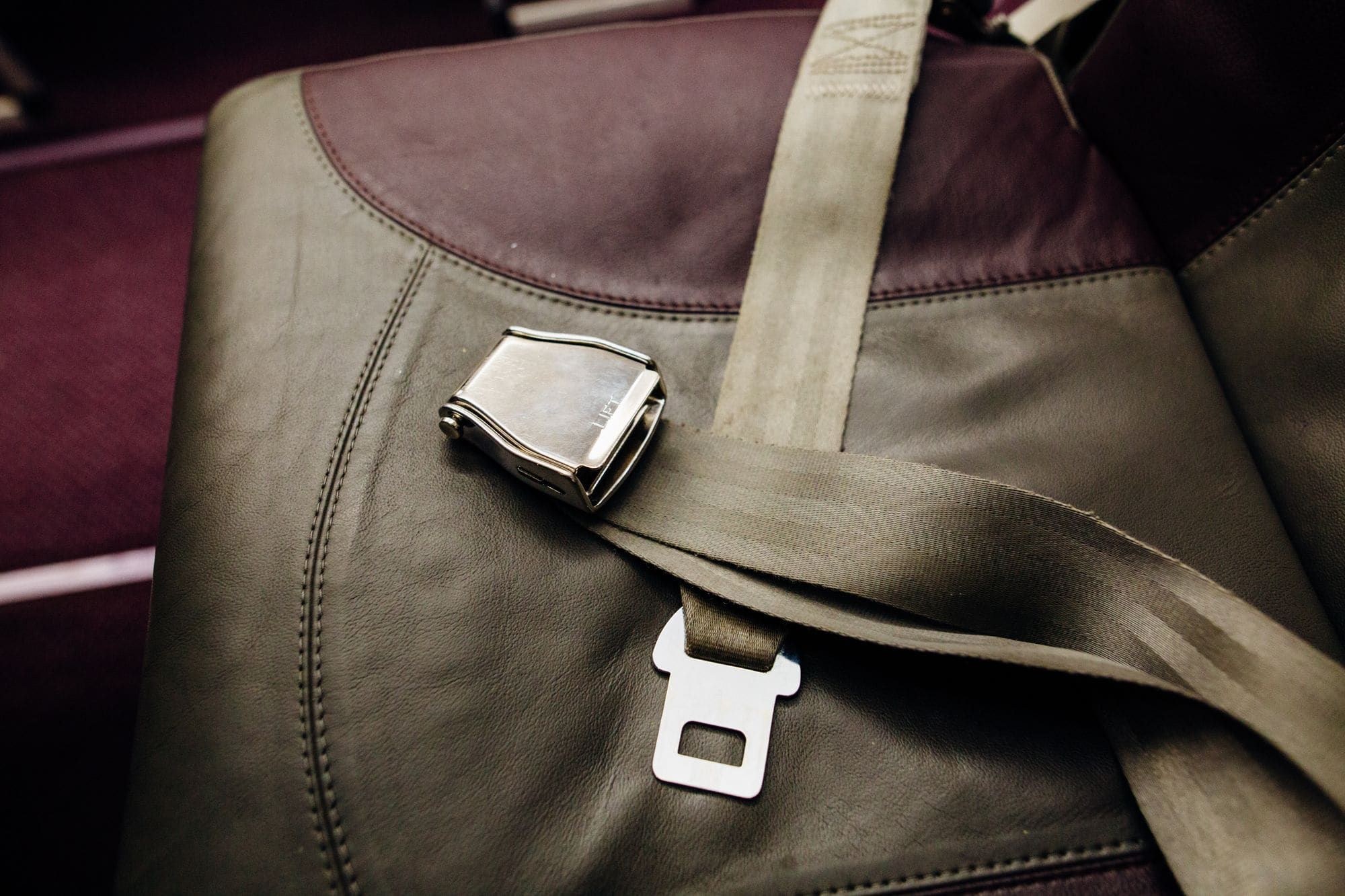
Do you have to wear a seatbelt on a private jet?
By Jake Lombardi. Published . 6 min read.
The short answer
Yes, for taxi, takeoff and landing. On a charter, 14 CFR 135.128 requires everyone on board to occupy an approved seat or berth with a separate safety belt fastened during movement on the surface, takeoff and landing, and 14 CFR 91.517(d) requires the belt to stay fastened while the fasten seat belt sign is lit. In cruise, with the sign off, the law leaves it to the crew's instructions.
On this page
- The short version
- What does the law actually require?
- Do you have to wear a seat belt during the whole flight?
- Can you sit on the couch for takeoff and landing?
- Can you use the bathroom during landing?
- What must the crew tell you about seat belts?
- What about babies and young children?
- How Jake works
- Sources
- More questions people ask
- Sources
Yes, for taxi, takeoff and landing, and whenever the seat belt sign is on. A private jet cabin looks like a room, with a couch and a table, which is why people ask. The federal rules for charter flights treat it as an aircraft cabin: every person needs an approved seat with their own belt fastened whenever the aircraft moves on the ground, takes off or lands.
Lombardi Jet Services arranges charters on aircraft flown by FAA Part 135 operators, so this page sets out the seat belt rules that apply on those flights, with the owner’s rules under Part 91 for comparison. Every rule is quoted from the eCFR as it stood on November 20, 2026.
The short version
- Belts are required for taxi, takeoff and landing. 14 CFR 135.128(a) covers “each person on board” a charter flight.
- The seat belt sign is binding. Under 14 CFR 91.517(d), which 135.127(g) applies to charters, you keep the belt fastened “while any ‘fasten seat belt’ sign is lighted.”
- In cruise, with the sign off, the law leaves it to the crew. The pilot can turn the sign on at any time it is “considered to be necessary”.
- The couch counts only if it is an approved seat. The rule says “approved seat or berth”, so a divan or a belted lavatory seat can be used for landing only if it is certified and fitted for it.
- Under two, a child may ride on a lap. Everyone two and older needs their own belt.
What does the law actually require?
An approved seat or berth, and a belt fastened, whenever the aircraft moves on the ground, takes off or lands. 14 CFR 135.128(a) says:
each person on board an aircraft operated under this part shall occupy an approved seat or berth with a separate safety belt properly secured about him or her during movement on the surface, takeoff, and landing.
Two things in that sentence matter. “Each person on board” means passengers, not only crew, with no exception for a short hop. “Separate safety belt” means one belt per person: the same paragraph says a belt “may not be used by more than one person who has reached his or her second birthday.”
The owner’s rule under Part 91 is almost the same. 14 CFR 91.107(a)(3) requires each person to “occupy an approved seat or berth with a safety belt and, if installed, shoulder harness, properly secured” for the same three phases. Paragraph (b) says 91.107 does not apply to Part 135 operations, which is why a charter follows 135.128 instead.
Do you have to wear a seat belt during the whole flight?
No. Between takeoff and landing, the requirement is to follow the seat belt sign and the crew. 14 CFR 91.517(a)(2) says the signs “must be illuminated during airplane movement on the surface, for each takeoff, for each landing, and when otherwise considered to be necessary by the pilot in command.” Paragraph (d) says each passenger “shall fasten his or her safety belt about him or her and keep it fastened while any ‘fasten seat belt’ sign is lighted”, and (e) requires passengers to comply with crewmember instructions.
14 CFR 135.127(g) makes 91.517(b) and (d) apply to charters. Paragraph (b) covers aircraft without signs: “The pilot in command … shall ensure that the passengers are notified orally each time that it is necessary to fasten their safety belts.” On a small jet with no flight attendant, that is often the pilot turning round or speaking over the intercom.
Turbulence injuries happen to people who are not strapped in, and a private jet feels the same rough air more than an airliner does, as explained in do private jets feel more turbulence. That is the reason to keep the belt on loosely whenever you are sitting down, sign or no sign.
Can you sit on the couch for takeoff and landing?
Only if that position is an approved seat with its own belt. The rule’s words are “approved seat or berth”, and the certification rule for transport-category jets, 14 CFR 25.785, says “Each seat or berth must be approved” and sets crash-load standards for each place “designated as occupiable during takeoff and landing.”
Whether a given divan, or each place on it, is approved for takeoff and landing is set by that aircraft’s approved configuration, and the briefing is where the crew says which seats to use. Lying across a divan for landing is not occupying a seat; a berth, where one is fitted, needs its own approval under 25.785(c).
Side-facing seats carry an extra standard: 25.785(d) says an occupant of a seat at more than 18 degrees to the aircraft’s centreline must be protected from head injury “by a safety belt and an energy absorbing rest … or by a safety belt and shoulder harness”.
Can you use the bathroom during landing?
Not unless the lavatory seat is itself a certified, belted passenger seat, which some light jets offer. Otherwise the lavatory is closed to you for taxi, takeoff and landing, because those phases require you to be in an approved seat. Which jets have a belted lavatory seat, and why it counts toward the passenger total, is covered in do private jets have bathrooms.
What must the crew tell you about seat belts?
How the belt works, and when it must be worn. 14 CFR 135.117(a)(2) requires an oral briefing before each takeoff on “The use of safety belts, including instructions on how to fasten and unfasten the safety belts.” It goes on:
Each passenger shall be briefed on when, where, and under what conditions the safety belt must be fastened about that passenger. This briefing shall include a statement that the Federal Aviation Regulations require passenger compliance with lighted passenger information signs and crewmember instructions concerning the use of safety belts.
The same briefing covers seat backs upright for takeoff and landing, exits, and, above 12,000 feet, oxygen. Who gives it on a jet without a flight attendant is explained in do private jets have flight attendants.
Under Part 91, 91.107(a)(1) and (a)(2) put the same duty on the pilot in command: no takeoff unless each person “is briefed on how to fasten and unfasten” the belt, and no taxi, takeoff or landing unless each person “has been notified to fasten” it.
What about babies and young children?
A child under two may sit on an adult’s lap with no belt of their own; from two, every child needs a seat and a belt. 135.128(a)(1) allows a child to “Be held by an adult … who is occupying an approved seat or berth, provided the child has not reached his or her second birthday and the child does not occupy or use any restraining device.” A car seat may be used instead if it carries the label “THIS RESTRAINT IS CERTIFIED FOR USE IN MOTOR VEHICLES AND AIRCRAFT” or another approval listed in the rule. Car seats, lap infants and ID are covered in flying private with a baby or children.
How Jake works
Jake names the operator and the aircraft in every quote, so the number of approved seats, and whether the divan or lavatory seat counts among them, is known before you book. For a group that fills the aircraft, he checks the seat count against the operator’s configuration rather than the brochure. He uses operators rated ARGUS Gold or Platinum, confirmed before quoting, and checks the operator’s record and the aircraft.
To ask about a trip, call +1 (862) 485-3510 or request a quote.
Sources
- 14 CFR 135.128, Use of safety belts and child restraint systems (eCFR), accessed November 20, 2026.
- 14 CFR 91.107, Use of safety belts, shoulder harnesses, and child restraint systems (eCFR), accessed November 20, 2026.
- 14 CFR 91.517, Passenger information (eCFR), accessed November 20, 2026.
- 14 CFR 135.117, Briefing of passengers before flight (eCFR), accessed November 20, 2026.
- 14 CFR 135.127, Passenger information requirements and smoking prohibitions (eCFR), accessed November 20, 2026.
- 14 CFR 25.785, Seats, berths, safety belts, and harnesses (eCFR), accessed November 20, 2026.
When the seat belt is required on a charter flight
By phase of flight, under the rules that apply to Part 135 charters.
| Phase | Belt required? | The rule |
|---|---|---|
| Before engines start | Briefing on how and when to fasten it | 135.117(a)(2) |
| Taxi | Yes, in an approved seat or berth | 135.128(a): "movement on the surface" |
| Takeoff | Yes, in an approved seat or berth | 135.128(a) |
| Cruise, sign off | Not by rule; follow crew instructions | 135.117(a)(2) briefing |
| Any time the sign is lit | Yes | 91.517(d), applied by 135.127(g) |
| Landing | Yes, in an approved seat or berth | 135.128(a) |
| Child under two | May be held on an adult’s lap without a belt | 135.128(a)(1) |
More questions people ask
Can I walk around the cabin of a private jet during the flight?
Yes, once the crew turns the seat belt sign off or says you may. The rules require belts for taxi, takeoff and landing and while the sign is lit; in between, they leave it to the crew. Unexpected turbulence is the reason to keep the belt on loosely whenever you are sitting down.
Can two people share one seat belt on a private jet?
No, unless one of them is under two. 14 CFR 135.128(a) says a seat belt 'may not be used by more than one person who has reached his or her second birthday'. A child under two may be held on an adult's lap without a belt of their own.
What happens if a passenger refuses to wear a seat belt?
They are breaking a federal rule. 14 CFR 135.128 requires every person on a charter to be belted for taxi, takeoff and landing, and the briefing required by 135.117 must state that the regulations require passengers to comply with the lighted signs and crewmember instructions on seat belts.
Do pets have to be secured on a private jet?
The seat belt rules are written for people. How a pet travels during taxi, takeoff and landing is set by the operator, and our page on flying with pets on a private jet covers what operators ask for.
Is the seat belt rule different if I own the jet?
Slightly. A private owner flies under 14 CFR 91.107, which also requires an approved seat or berth with the belt fastened for surface movement, takeoff and landing, and a pilot briefing on how the belts work. A charter adds 135.117's oral briefing, which must say when, where and under what conditions the belt must be fastened.
Sources
- 14 CFR 135.128, Use of safety belts and child restraint systems (eCFR) (accessed November 20, 2026)
- 14 CFR 91.107, Use of safety belts, shoulder harnesses, and child restraint systems (eCFR) (accessed November 20, 2026)
- 14 CFR 91.517, Passenger information (eCFR) (accessed November 20, 2026)
- 14 CFR 135.117, Briefing of passengers before flight (eCFR) (accessed November 20, 2026)
- 14 CFR 135.127, Passenger information requirements and smoking prohibitions (eCFR) (accessed November 20, 2026)
- 14 CFR 25.785, Seats, berths, safety belts, and harnesses (eCFR) (accessed November 20, 2026)
Related articles
- Do private jets have black boxes?
Safety and trust
- ARGUS, Wyvern and IS-BAO ratings
Safety and trust
Route guides
Flight times, prices and airport detail for trips where this applies.
- Teterboro to London
International
- Teterboro to Palm Beach
Florida
- Teterboro to Aspen
Mountains

Written by Jake Lombardi
Jake is the managing director of Lombardi Jet Services. He has spent 15 years in private aviation and has arranged more than 1,000 charters. He holds a CPA license, volunteers with Backpacks for Life and collects art and memorabilia. About Jake
Plan this trip with Jake
Tell Jake your dates and how many are travelling, and he will come back with options and one clear price.
Request a quoteCall Jake: +1 (862) 485-3510
Lombardi Jet Services is an air charter broker. It is not a direct air carrier and does not have operational control of any aircraft. Flights are provided by properly licensed direct air carriers (FAA Part 135 operators, or foreign equivalents), which keep operational control. We act as our clients' agent.