Is it safe to charter a single-engine plane like the PC-12?
By Jake Lombardi. Published . 5 min read.
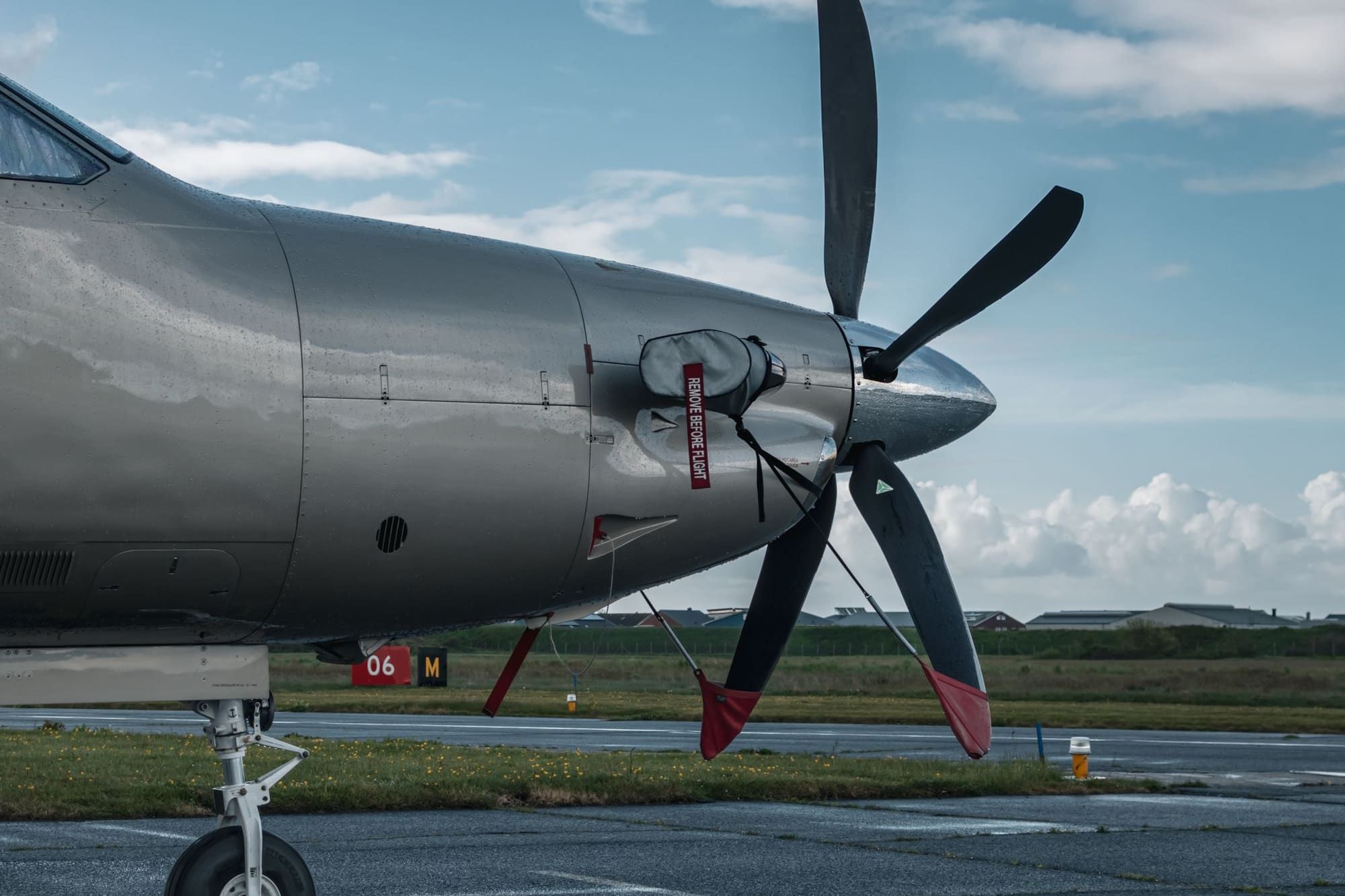
The short answer
A single-engine turboprop such as the Pilatus PC-12 may carry charter passengers in cloud only under extra FAA rules in force since May 3, 1998: two independent electrical sources or a one-hour standby (14 CFR 135.163), an engine trend monitoring programme (135.421), and limits that keep it within reach of a safe landing if the engine stops, over water (135.183) and above cloud (135.181).
On this page
- The short version
- Why is a single-engine plane allowed to carry passengers in cloud?
- What extra equipment does it need?
- How is the engine monitored?
- What happens if the engine stops?
- What does Europe allow?
- Is it as safe as a twin?
- What should you ask before you book?
- How Jake works
- More questions people ask
- Sources
A single-engine turboprop is allowed to carry charter passengers in cloud because the FAA decided, in 1997, that it could be done safely with extra equipment, extra maintenance and limits on where the aircraft flies. Whether a particular PC-12 or Caravan trip is a sensible choice depends on whether those limits fit the route. Lombardi Jet Services arranges charters on aircraft operated by Part 135 certificate holders, and this page sets out what the rules require of a single-engine aircraft that a twin does not.
The rules quoted here are in 14 CFR Part 135 as they stand on November 11, 2026.
The short version
- It has been legal since May 3, 1998. The FAA’s rule “Commercial Passenger-Carrying Operations in Single-Engine Aircraft Under IFR” took effect that day.
- It needs backup power. Two independent electrical sources, or a standby that can carry 150% of the essential load for at least an hour, under 14 CFR 135.163(f).
- The engine is watched for trends. 135.421(c) requires an engine trend monitoring programme, with results recorded.
- It must stay within reach of a landing. Over water, it must be able to reach land if the engine fails (135.183), and beyond 50 nautical miles from shore it needs life preservers and rafts as well. Above cloud, it must be able to descend into clear weather (135.181).
- No official rate compares one engine with two. We have not found one from the FAA or NTSB, and the FAA said in 1997 it could not compute one.
Why is a single-engine plane allowed to carry passengers in cloud?
Because the FAA changed the rule. Before 1998, Part 135 did not allow single-engine aircraft to carry passengers under instrument flight rules. The final rule published on August 6, 1997 (62 FR 42364) allowed it from May 3, 1998, for turbine and piston aircraft, on conditions. Explaining what was left of the old restrictions, the FAA wrote: “Only the performance requirements for multi-engine aircraft and over-the-top requirements remain.”
The conditions are the rest of this page. They aim at the two things that matter when there is one engine: keeping the instruments working if electrical power fails, and catching an engine problem before it becomes a failure.
What extra equipment does it need?
Backup electrical power and a second source for the flight instruments. Under 14 CFR 135.163(f), a single-engine aircraft carrying passengers under IFR must have either:
(1) Two independent electrical power generating sources each of which is able to supply all probable combinations of continuous inflight electrical loads for required instruments and equipment; or (2) In addition to the primary electrical power generating source, a standby battery or an alternate source of electric power that is capable of supplying 150% of the electrical loads of all required instruments and equipment necessary for safe emergency operation of the aircraft for at least one hour
Paragraph (h) adds two independent energy sources for the gyroscopic instruments, at least one of them engine-driven, installed so that one failing does not take out the other. Twins meet the power rule with a generator on each engine under 135.163(g).
How is the engine monitored?
By trend monitoring, written into the maintenance programme. 14 CFR 135.421(c) requires, for each single-engine aircraft used for passenger IFR, either “the manufacturer’s recommended engine trend monitoring program, which includes an oil analysis, if appropriate”, or an FAA-approved programme with oil analysis “at each 100 hour interval or at the manufacturer’s suggested interval, whichever is more frequent.”
Paragraph (e) bars the operator from flying the aircraft with passengers under IFR unless it “records and maintains in the engine maintenance records the results of each test, observation, and inspection” the programme requires. That record is something you can ask about.
What happens if the engine stops?
The aircraft glides, and the rules keep a landing within reach. Two sections do the work:
- Over water. 14 CFR 135.183 bars a land aircraft carrying passengers over water unless “it is operated at an altitude that allows it to reach land in the case of engine failure”, it is taking off or landing, or it is a twin that can still climb at 1,000 feet on one engine. A single-engine aircraft has only the first two options.
- Above cloud. 14 CFR 135.181(a)(1) bars a single-engine aircraft carrying passengers “over-the-top”, meaning above a cloud layer, unless the weather along the route allows flight under visual rules below the clouds until at least an hour after arrival, or conditions allow “descent under VFR if its engine fails.”
Neither rule mentions night or mountains. Those are questions for the operator’s own procedures, and worth asking about if the trip crosses the Rockies or flies late.
What does Europe allow?
Since March 2017, EASA has allowed single-engine turbine aircraft to carry commercial passengers in instrument conditions across Europe, according to Pratt & Whitney Canada, which builds the PT6A turboprop engine. The company says engines must show “a demonstrated power loss event rate of less than 10 in a million” and “a cumulative time in service of at least 100,000 hours” to qualify. Those are manufacturer statements about Europe’s criteria, not FAA rules.
Is it as safe as a twin?
We cannot say from official data, and nobody else can say it from official data either. When the FAA adopted the 1997 rule it noted that it could not compute accident rates without flight-hour data for each type of operation, and we have not found a later FAA or NTSB figure that splits charter accidents by engine count. Rates quoted on sales pages do not cite a method.
What can be said is narrower. The rules add conditions to single-engine aircraft that twins do not carry, and they make the route part of the safety case. So the useful question about a PC-12 trip is whether the route stays inside those limits.
What should you ask before you book?
- Does the operator hold single-engine IFR passenger authority for this aircraft? It needs the equipment in 135.163 and the programme in 135.421.
- Will there be two pilots, or an approved autopilot? 135.101 requires a second pilot under IFR unless 135.105 applies.
- How does the route handle water, cloud, mountains and night? Ask how 135.181 and 135.183 shape the flight plan.
- When was the last trend monitoring entry? The results have to be in the engine records.
How Jake works
Jake names the operator and the aircraft in every quote, deals with the certificate holder directly, and checks the operator’s record and the aircraft. He uses operators rated ARGUS Gold or Platinum, confirmed before he quotes. On a single-engine trip, he puts the four questions above to the operator before you confirm.
What Part 135 asks of one engine that it does not ask of two
Both kinds of aircraft can carry charter passengers in cloud. The single-engine aircraft carries more conditions to do it.
| Single-engine (PC-12, Caravan) | Multi-engine | |
|---|---|---|
| Electrical power under IFR | Two independent sources, or a standby for 150% of essential loads for at least 1 hour (135.163(f)) | A generator or alternator on separate engines (135.163(g)) |
| Engine maintenance | Engine trend monitoring programme, results recorded, for passenger IFR (135.421(c), (e)) | Manufacturer or approved programme (135.421(a)) |
| Above cloud (over-the-top) | Only with VFR forecast below, or where it could descend under VFR if the engine fails (135.181) | Must climb 50 ft/min on one engine at the route minimum or 5,000 ft (135.181(a)(2)) |
| Over water | At an altitude that allows it to reach land if the engine fails (135.183(a)) | Or at a weight that climbs 50 ft/min on one engine at 1,000 ft (135.183(c)) |
| Second pilot under IFR | Required unless an autopilot is approved (135.101, 135.105) | Required unless an autopilot is approved (135.101, 135.105) |
More questions people ask
Can a single-engine charter fly from Florida to the Bahamas?
Yes, within the over-water rule. Under 14 CFR 135.183, a land aircraft carrying passengers over water must fly at an altitude that allows it to reach land if the engine fails, unless it is taking off or landing. On longer water crossings that sets the altitude, and on some routes it rules the aircraft out; the operator plans it.
Does a single-engine charter need two pilots?
Under instrument flight rules, yes, unless the operator holds FAA approval to use an autopilot instead under 14 CFR 135.105. The autopilot must control the aircraft about all three axes and be authorised in the operator's operations specifications.
Is a twin-engine turboprop safer than a PC-12?
We have not found an official FAA or NTSB accident rate that compares single-engine and twin-engine turboprops in charter, so we do not claim either way. When the FAA allowed single-engine IFR passenger charter in 1997, it said it could not compute such rates without flight-hour data. The rules instead add equipment, maintenance and route limits to single-engine aircraft.
What happens if the engine fails in a PC-12?
The aircraft glides, and the pilot flies it to a landing. The rules are written around that: 135.181 allows a single-engine charter above cloud only where it could descend into clear weather if the engine fails, and 135.183 keeps it within gliding reach of land over water. Ask the operator how it plans routes over mountains and at night.
How much has the PC-12 flown?
FLYING Magazine reported in May 2023 that the PC-12 fleet, more than 1,900 aircraft since certification in 1994, had passed 10 million flight hours. Fleet hours describe experience with the type, not its accident rate.
Sources
- eCFR: 14 CFR 135.163, Equipment requirements, aircraft carrying passengers under IFR (accessed November 11, 2026)
- eCFR: 14 CFR 135.181, Performance requirements, over-the-top or in IFR conditions (accessed November 11, 2026)
- eCFR: 14 CFR 135.183, Performance requirements, land aircraft operated over water (accessed November 11, 2026)
- eCFR: 14 CFR 135.421, Additional maintenance requirements (accessed November 11, 2026)
- eCFR: 14 CFR 135.105, Approval for use of autopilot system (accessed November 11, 2026)
- Federal Register: Commercial Passenger-Carrying Operations in Single-Engine Aircraft Under IFR, 62 FR 42364 (FAA, August 6, 1997) (accessed November 11, 2026)
- Pratt & Whitney: Single-engine IFR opens more PT6A flight opportunities in Europe (April 19, 2018) (accessed November 11, 2026)
- FLYING: Pilatus PC-12 fleet logs 10 million flight hours (May 3, 2023) (accessed November 11, 2026)
Related articles
- Do you have to wear a seatbelt on a private jet?
Safety and trust
- Do private jets have black boxes?
Safety and trust


Written by Jake Lombardi
Jake is the managing director of Lombardi Jet Services. He has spent 15 years in private aviation and has arranged more than 1,000 charters. He holds a CPA license, volunteers with Backpacks for Life and collects art and memorabilia. About Jake
Plan this trip with Jake
Tell Jake your dates and how many are travelling, and he will come back with options and one clear price.
Request a quoteCall Jake: +1 (862) 485-3510
Lombardi Jet Services is an air charter broker. It is not a direct air carrier and does not have operational control of any aircraft. Flights are provided by properly licensed direct air carriers (FAA Part 135 operators, or foreign equivalents), which keep operational control. We act as our clients' agent.